
The team led by Academician WANG Jian’an, President of the Second Affiliated Hospital of Zhejiang University School of Medicine (hereinafter referred to as “SAHZU”), has focused on clinical challenges and technological bottlenecks. Leveraging the National Key Laboratory for Endovascular Implantable Devices, the team has successfully developed a “Whole-Vessel Digital Human” technology system.
The “Whole-Vessel Digital Human” is a 1:1 digital replica of the human vascular system in terms of both its structure and function, and was created through digital-twin technology based on vast datasets of real human vascular information.
Heart Valve Disease Diagnosis and Treatment:
From Early Screening Through Surgical Planning to Follow-up
“AI + Digital Human” Enable Full-Cycle Care
For patients with early-stage or mild heart valve disease, AI can integrate routine imaging data such as ECG, chest CT, and chest X-ray results and automatically identify high-risk individuals by comparing them with the database of valvular lesion features stored in the “Whole-Vessel Digital Human.”
For patients who have already been diagnosed with valvular disease, AI performs the intelligent segmentation of the heart valves and surrounding vascular structures. It precisely labels the degree of calcification, the range of stenosis, and the location of adjacent critical vessels and nerves, thereby generating a complete “surgical map.” Afterward, combined with hemodynamic simulation technology, AI can preview the entire valve implantation procedure on the digital model, simulate the outcomes of prostheses of different sizes, and analyze the potential impacts of the surgery on blood flow.
Revolutionizing Coronary Artery Disease Care:
Noninvasive Assessment Replaces Invasive Assessment
AI Becomes the “Gatekeeper” of the Cath Lab
The key to the precise, interventional treatment of coronary artery disease lies not merely in determining the degree of coronary stenosis, but also in assessing whether the stenosis actually causes myocardial ischemia—since not all stenoses require intervention. The critical question is whether or not the blood flow to the myocardium is impaired. Technologies such as CT-FFR (FFR derived from coronary CTA) and QFR (quantitative flow ratio from coronary angiography) allow noninvasive blood-flow assessment to determine ischemia. The “Whole-Vessel Digital Human” serves as a foundational platform for these technologies.
Compared with conventional coronary CTA, this approach can help patients to avoid approximately 26.2% of unnecessary coronary angiography procedures. Previously, a CT-FFR analysis required about one day to complete; now, with the support of AI and the “Digital Human,” the results can be generated within 10 minutes, dramatically improving the level of efficiency.
The FLAVOUR II study, led by Academician Wang Jian’an and Professor HU Xinyang, confirmed that AI-empowered QFR technology delivers clinical effectiveness comparable to intravascular ultrasound (IVUS) in guiding coronary interventions. Moreover, it requires only a single-view angiographic image and can complete the entire analysis in just one minute, representing a major breakthrough with regard to diagnostic efficiency.
The “Whole-Vessel Digital Human” also supports the diagnosis and treatment of peripheral vascular diseases. Based on this technology, SAHZU has built China’s largest peripheral vascular database and developed an AI-powered early-warning platform using pan-vascular big data, enabling comprehensive risk management for patients with hypertension, hyperlipidemia, diabetes, and other chronic conditions.
“Going forward, SAHZU will continue to explore the frontiers of AI–medicine integration, enabling more patients to benefit from these advances,” commented Academician WANG Jian’an.
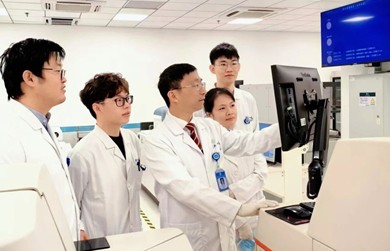
On March 12, 2026, Zhejiang Province announced the results of its first annual selection of “the most admirable medical workers.” GUO Renyong, head of the Department of Laboratory Medicine of the Fi...
The team led by Academician WANG Jian’an, President of the Second Affiliated Hospital of Zhejiang University School of Medicine (hereinafter referred to as “SAHZU”), has focused on clinical challen...
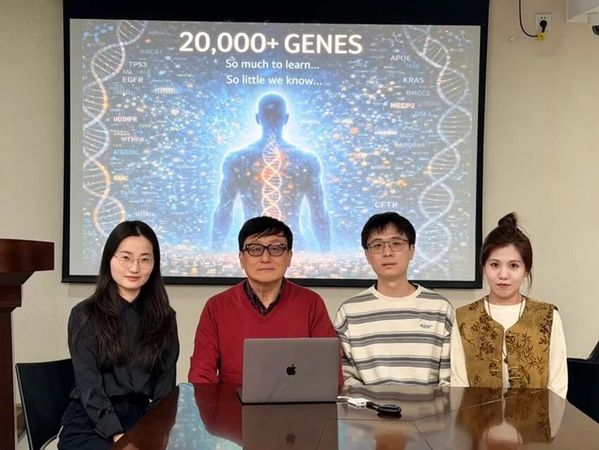
Bird flu, SARS, HIV/AIDS … Many of the infectious diseases that have unsettled the world have one thing in common: they first emerged in animals. Birds, bats, monkeys and other hosts can carry viruse...
